Sexual health is a fundamental aspect of overall well-being, and making informed choices about contraception is crucial for both individuals and couples alike.
With all of the options that are available to us, understanding the different types of sexual health products and their effectiveness can help you make decisions that align with not only your health needs but also your lifestyle and personal preferences.
This guide examines the five primary categories of contraception, their advantages and disadvantages, and how to obtain these services in the UK.
The 5 Main Types of Contraception
Barrier Methods
A barrier method type of contraception is typically what you would think of when you think of the word ‘contraception’. Barrier methods of contraception work by physically preventing the sperm from reaching the egg. These include items such as external (sometimes called male) and internal (sometimes called female) condoms.
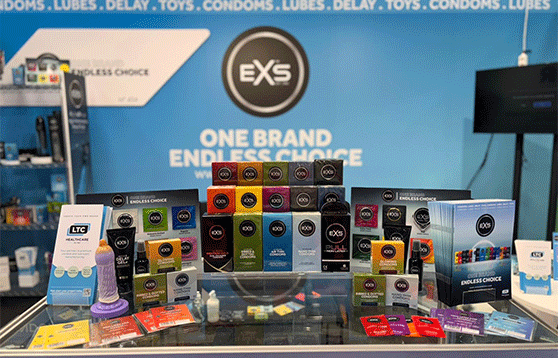
As a trusted supplier to both the public and private sectors, LTC Healthcare offers one of the UK’s widest ranges of barrier contraceptives, including our EXS condom brand, which is used by the NHS and approved for public health distribution.
External Condoms
External condoms are thin sheaths typically made from latex, polyurethane, or polyisoprene that are worn over the penis during sexual intercourse.
External condoms are highly effective when used correctly and consistently, with a perfect use rate of 98%(1). Beyond pregnancy prevention, they are one of the few contraceptive methods that provide significant protection against sexually transmitted infections (STIs).
EXS Condoms are manufactured under strict quality and safety standards and certified to ISO 4074, offering a wide variety of styles, materials, and sizes to suit diverse user needs.
External condoms are widely available without prescription, relatively inexpensive, and have no systemic side effects. However, some individuals may experience latex allergies, and most importantly, the method requires consistent use with each act of intercourse.
Internal Condoms
Internal condoms are inserted into the vagina before sexual intercourse. EXS produce internal condoms made from a non-latex AT10 material and covering more surface area for better protection against STIs and pregnancy. They also have secure loops which go around the user’s hips to keep the condom in place.
The effectiveness of internal condoms is similar to external condoms, with a perfect use rate of 95%(2). Like external condoms, they protect against both pregnancy and STIs.
Internal condoms can be inserted up to eight hours before intercourse, which may be more convenient than external condoms. They are controlled by the person with the vagina, which can be empowering for those who prefer to take responsibility for contraception. The method does not require hormones and has no systemic side effects. Like with external condoms, this contraceptive method requires a new condom for each act of intercourse.
LTC Healthcare supplies EXS internal condoms, available for both retail and public health-friendly bulk options. These products are ideal for clinics looking to provide alternatives that centre autonomy and comfort.
Diaphragms and Cervical Caps
Diaphragms and cervical caps both cover the cervix to prevent sperm from entering the uterus. A diaphragm is a dome-shaped cup made of silicone that sits over the cervix, while a cervical cap is smaller and fits directly over the cervix like a thimble.
Both methods must be used with spermicide to increase effectiveness. When used correctly and consistently with spermicide, diaphragms and caps have an effectiveness rate of between 92 and 96%(3).
Diaphragms and cervical caps are reusable, hormone-free, and should be in place before any sexual activity. However, they require proper fitting and training for correct use. While less common in UK schemes, they offer important non-hormonal options and may be suitable for specialist settings.
Hormonal Contraception
Hormonal contraception works by using synthetic versions of naturally occurring hormones—primarily estrogen and progestin—to prevent pregnancy. These methods alter the body’s natural hormonal cycle in several ways. For example, they suppress ovulation (preventing eggs from being released), thicken cervical mucus to block sperm, and also thin the uterine lining to reduce the likelihood of implantation.
Typical forms of hormonal contraception include the combined oral contraceptive pill, the progestin-only pill (sometimes called the mini-pill), contraceptive patches, vaginal rings, and the injection.
Intrauterine Devices
Intrauterine devices are small, T-shaped contraceptive devices inserted into the uterus by a healthcare professional. There are two main types: hormonal IUDs that release progestin locally, and copper IUDs that create an environment hostile to sperm and eggs without using hormones.
Hormonal IUDs work by thickening cervical mucus, thinning the uterine lining, and sometimes suppressing ovulation, whilst the copper IUD functions as a spermicide, with copper ions creating an environment that immobilises sperm and prevents fertilisation. Both types can remain effective for several years, and they also offer the convenience of long-term protection without daily attention.
Permanent Contraception
Permanent contraception, also known as sterilisation, is designed for individuals who are sure they do not want children or any more children. For women, this typically involves tubal ligation (having the fallopian tubes blocked or cut), while for men, it involves vasectomy (cutting or blocking the vas deferens).
These procedures are considered permanent, although reversal may be possible in some cases; however, it is not guaranteed to restore fertility. Because of this, the decision to undergo permanent contraception should be made carefully, as it is intended to be irreversible.
Emergency Contraception
Emergency contraception is designed to prevent pregnancy after unprotected sex or contraceptive failure. There are several options available, the main one being emergency contraceptive pills.
Emergency contraceptive pills work most effectively when taken as soon as possible after unprotected sex, with different formulations effective for various periods.
Making Informed Choices
Choosing the right contraceptive method for you involves considering multiple factors, including effectiveness, convenience, side effects, and personal lifestyle.
Personal factors to consider include frequency of sexual activity, ability to remember daily medication, comfort with hormonal methods, and whether protection against STIs is required.
Medical history can also influence the choice of methods, so it’s important to discuss your options with a healthcare professional who can provide more in-depth advice based on your circumstances and medical history. They can then also explain the benefits and potential side effects of each method, helping you make an informed decision that is best suited to your needs.
Partnering with LTC Healthcare
For over 30 years, LTC Healthcare has supported NHS trusts, retailers, pharmacies, and public health schemes with expert distribution of quality-assured sexual health products.
Our portfolio includes:
- EXS Condoms – trusted by NHS professionals and loved by consumers
- Internal condoms – available in bulk or retail packs
- Lubricants, toys, and educational kits – designed to promote inclusive, safe sex
- Public health scheme support – including stock management and guidance
We work closely with clinical leads, commissioners, and procurement teams to ensure you have access to sustainable, ethically produced, and regulatory-compliant products.
Access and Availability
In the UK, many contraception options are available free of charge through the NHS, regardless of age. Services are accessible through sexual health clinics, also called family planning or contraception clinics, and other healthcare providers. As well as comprehensive contraceptive care, these clinics also provide STI testing and general sexual health advice.
If based elsewhere in Europe, EXS have storefronts based in Germany, France and Italy.
Conclusion
Choosing the right contraceptive method for you is a personal decision that should be based on individual needs, preferences, and circumstances. To make this decision, all available options should be considered, and a healthcare professional who can provide personalised guidance should be consulted.
Understanding the contraceptive landscape is vital also for the professionals and organisations who support them. By offering a comprehensive mix of sexual health solutions, you empower users to make confident and informed choices.
It’s important to remember that contraceptive needs may change over time, and what works at one stage of life may not be suitable at another. Regular reviews with healthcare providers can ensure that your contraceptive method continues to meet your needs and lifestyle effectively.
With free access to contraception and sexual health services in the UK through the NHS, support and guidance are readily available to help you make informed choices about your sexual health and well-being.
Sources
1. NHS UK, https://www.nhs.uk/contraception/methods-of-contraception/condoms/
2. NHS UK, https://www.nhs.uk/contraception/methods-of-contraception/internal-condoms/
3. NHS UK, https://www.nhs.uk/contraception/methods-of-contraception/contraceptive-diaphragm-or-cap/how-to-use-it/