How to Start a Condom Brand: From Product Development to Launch
Starting a condom brand involves more than choosing a logo and finding a supplier. Condoms are medical devices, so product decisions, packaging, compliance, manufacturing and route to market need to work together.
If you are researching how to start a condom brand, begin with a clear audience and a realistic first range. From there, you can develop custom condoms around genuine customer needs and build the commercial and regulatory foundations for launch.
Start with the customer, not the packaging
Before discussing colours, foils or pack finishes, define who you want to serve and what will make your range relevant to them.
That might be a specific fit, a thinner feel, non-latex materials, stronger sustainability credentials or a more inclusive brand identity. It could also be a retail proposition built around simple product navigation and clear sizing.
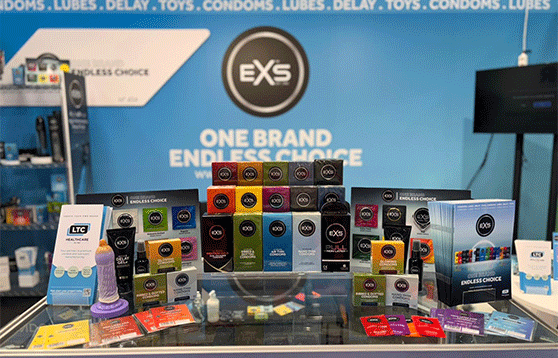
The EXS condom collection shows how an established range can separate products by fit, material, sensation and format rather than relying on packaging alone. LTC Healthcare’s sexual wellness market trends overview also gives broader commercial context for the category.
Choose the right condom products
The next stage in how to start a condom brand is selecting the product itself. Condoms can vary by material, nominal width, shape, thickness, texture, lubrication and flavour.
LTC Healthcare’s sexual health product range includes regular, textured, flavoured, thin and specialist condom options for different audiences and markets. For a practical view of how product differences reach consumers, compare EXS Nano Thin Condoms with the EXS non-latex condom collection.
Your first products should solve distinct needs. If two branded condoms look different but offer almost the same user proposition, customers and retailers may struggle to understand why both belong in the range.
Think beyond the launch SKU too. Can the range expand naturally into different sizes, materials or complementary products such as lubricants? Building that logic early makes future development easier.
Decide how your own brand condoms will be manufactured
Most new brands do not build a condom factory. They work with an experienced private label or manufacturing partner with the facilities, quality systems and technical expertise required for medical device production.
LTC Healthcare supports businesses from product selection and custom packaging through to compliance, production and delivery. Available options include different condom styles, materials and packaging formats, with minimum order quantities depending on the project.
Custom condoms do not need to be new inventions. A sensible route may be to start with a proven product specification and differentiate it through fit, material, pack format and branding.

Before committing, ask what can genuinely be customised, what the minimum order quantities are, which certifications apply and what documentation will be available to your business. LTC Healthcare’s private label condom manufacturing guide provides more detail on how this process works.
Protect the brand before approving artwork
Brand naming should happen early, but final packaging should not.
Before investing heavily in design, check whether the proposed brand name or logo conflicts with existing trade marks. The UK Intellectual Property Office recommends checking for identical or similar registered marks before applying for protection.
Then build packaging around both the customer experience and the regulatory information the product needs to carry. A condom pack has to do more than look good on a shelf. It also needs room for required product information, identification details and appropriate conformity markings.

Build compliance into product development
Knowing how to start a condom brand also means understanding who holds the legal responsibilities for the product.
In Great Britain, a business that places a medical device on the market under its own name can be treated as the legal manufacturer, even where another company physically makes the device. MHRA guidance on virtual manufacturing sets out responsibilities around technical documentation, quality systems and post-market activity.
Medical devices placed on the Great Britain market must also be registered with the MHRA before they are placed on the market. The exact conformity route and product marking depend on the device and target market.
Plan costs around the whole launch
The unit price of the condom is only one part of the business case. Your budget may also need to cover packaging origination, design, regulatory work, freight, warehousing, samples, e-commerce setup and marketing.
Minimum order quantities affect cash flow too. Flexible MOQs can help a new brand test demand without tying up too much money in stock, but the lowest possible order is not always the most economical choice.
Work backwards from the selling price and channel margin. A direct-to-consumer brand, pharmacy supplier and wholesale proposition may each need a different cost structure.
If wider distribution is part of the plan, LTC Healthcare’s wholesale and global distribution service can also help you consider how production volumes and routes to market may develop over time.
Prepare the sales story before stock arrives
A product is not launch-ready simply because manufacturing is complete. Retailers, distributors and consumers need a clear reason to choose it.
Prepare photography, specifications, pack dimensions, product descriptions and sales materials before your first shipment arrives. LTC Healthcare partners can also access the Asset Hub for product and marketing resources.
Established ranges offer useful merchandising cues. EXS flavoured condoms are grouped around a clear product benefit, while the EXS regular-fit collection lets shoppers compare fit and style. Your own range needs equally simple navigation, especially where product differences are technical.
Launch with room to learn
The final stage in how to start a condom brand is not a single launch day. It is the start of a feedback cycle.
Track which products sell, which messages work, what retailers ask for and where complaints reveal friction. Use that information to improve future production runs rather than expanding the range simply because more options are available.
That approach is particularly useful for own brand condoms because packaging, product mix and order quantities can often be refined from one run to the next.
Build a condom brand with an experienced private label partner
If you are working out how to start a condom brand, the right manufacturing partner can simplify the path from concept to a compliant, market-ready product.
LTC Healthcare has worked in sexual health since 1993 and supports start-ups, retailers, distributors and established businesses with private label condoms and lubricants. The team can help with product selection, custom packaging, compliance, production and delivery.