White Label vs Private Label: What’s the Difference?
White label and private label condoms both let you sell condoms under your own brand without running a factory. The difference is how much of the product is made for you, and how much control you have over it.
This guide explains how the two models work, how they compare on cost, minimum orders, branding and compliance, and how to decide which route suits your business.
What white label and private label condoms mean
White label condoms are standard, finished products made for many buyers. You add your branding, usually to the outer box or label, while the condom itself, and often a plain or generic foil, stays the same as other brands using the same product. Because nothing is developed from scratch, white label is usually the quickest and simplest way to get a branded product on sale.
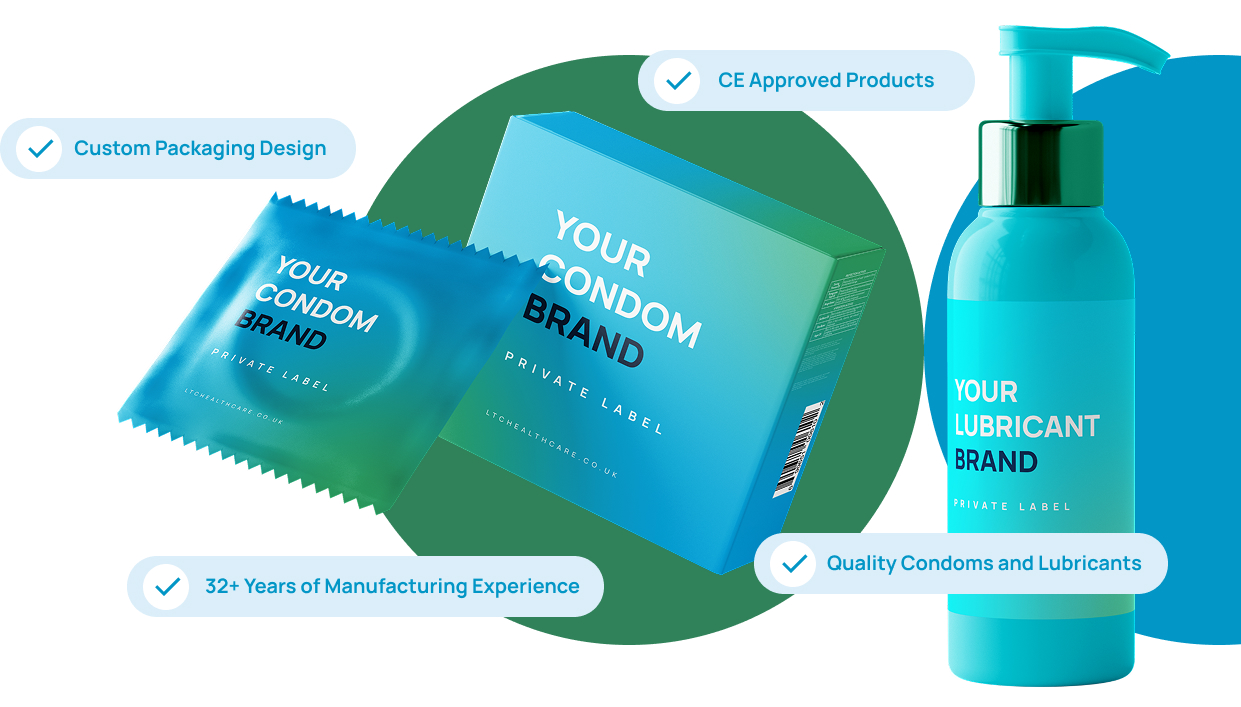
Private label condoms are made and packaged to your specification and sold only under your brand. You choose the condom style, the foil printing, the retail packaging and sometimes the lubricant or flavour, and the finished product is exclusive to you. It takes more planning, but it gives you a product that customers cannot find under another name.
White label vs private label compared
When white label condoms make sense
White label is a practical choice when speed and low risk matter more than standing out. Typical examples include a retailer adding an own brand line next to established brands, an online shop testing demand before investing in a full range, or an organisation that needs branded condoms for a campaign or event without developing a product.
The trade-off is differentiation. If the same condom and foil are available to other businesses, your brand has to compete on price, packaging and marketing rather than on the product itself.
When private label condoms make sense
Private label suits brands that want a range of their own. You can build a line around a clear position, such as vegan condoms, thin condoms, larger fits or sustainably sourced latex, and present it consistently from the foil to the shelf.
Because the product is exclusive, private label also protects your margin over time. Customers who like your condoms can only buy them from you, and you control how the range grows, which new styles you add and how each pack is presented.
Our guide to how to start a condom brand walks through the full launch process, from product choice to marketing.

Compliance and the name on the pack
Whichever route you choose, condoms are medical devices. In the EU they are Class IIb devices under the Medical Device Regulation, they are tested against standards such as ISO 4074, and they must carry a CE mark, or in Great Britain a CE or UKCA mark. Our guide to condom regulations in the UK and EU covers this in more detail.
The name on the packaging matters. Under Article 16 of the EU Medical Device Regulation, a business that makes a device available under its own name, registered trade name or registered trade mark takes on the obligations of a manufacturer. The exception is where a distributor or importer has an agreement with the manufacturer, who is identified on the label and stays responsible for meeting the regulation’s requirements.
How to choose between white label and private label
Start with what you want the range to do for your business, then work back to the right model.
How LTC Healthcare supports own brand condoms
LTC Healthcare has supplied condoms and lubricants since 1993 and offers a full white label and private label condom service, covering lube as well as condoms. You can choose from more than 10 condom options, including vegan, PETA approved, low-protein Vytex latex, sustainable latex from the Regenerative Rubber Initiative and non-latex condoms.

Formats range from printed bulk foils and branded envelopes and wallets to shelf-ready retail packs, with multilingual packaging available in more than 17 languages. Our regulatory team helps with CE, UKCA and FDA requirements, and flexible MOQs mean you can start small and scale. For more detail, read our answers to common questions about private label condom manufacturing.
White label vs private label: FAQs
Are white label condoms cheaper than private label?
White label usually costs less upfront because the product and packaging already exist. Private label can work out well per unit at higher volumes, so compare total cost against the volume you expect to sell.
Can I have my logo printed on the condom wrapper?
Yes. Printed foils are a private label or custom option, and they are popular for both retail brands and promotional condoms.
Do I need my own CE or UKCA certificate?
It depends on how your supply is set up. If the manufacturer is named on your label under an agreement, the manufacturer remains responsible. If you place condoms on the market under your own name without that arrangement, you take on manufacturer obligations. Take regulatory advice for your situation.
Can I sell the same products in several countries?
Often, yes, but each market can have its own registration and language requirements, so plan these with your supplier before production.
Talk to us about your own brand condoms
Whether you want a quick branded line or a fully exclusive range, our team can help you choose the right route, the right products and the right packaging for your market.